
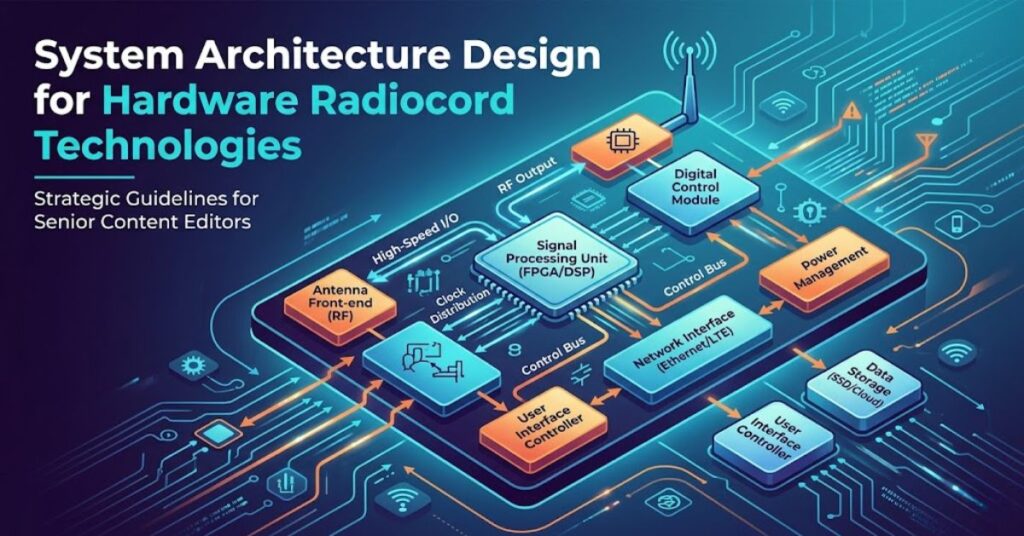
In today’s rapidly evolving wireless communication industry, the backbone of every reliable device is system architecture design for hardware radiocord technologies. Whether you’re working with IoT systems, radio devices, or smart hardware solutions, everything depends on how well the system is designed.
Many people assume that powerful hardware alone guarantees performance. However, the real strength lies in how different components are structured and connected. This is where system architecture design for hardware radiocord technologies becomes essential.
To understand the basics, you can explore system architecture here:
https://en.wikipedia.org/wiki/System_architecture
In this article, we will explain everything in simple language, so even beginners can understand and apply these concepts effectively.
System Architecture Design for Hardware Radiocord Technologies Overview: Fundamentals and Core Concepts
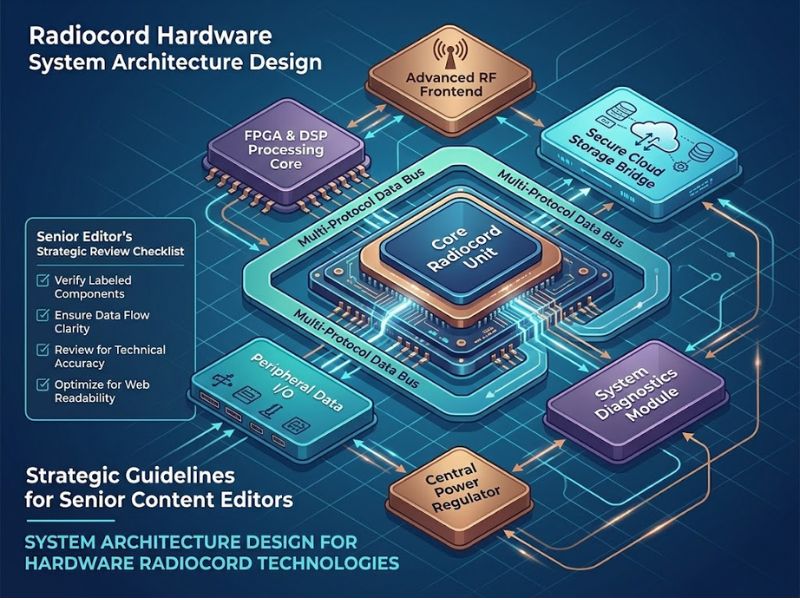
At its core, system architecture design for hardware radiocord technologies is about organizing hardware components to ensure efficient communication and performance.
This includes:
- Signal transmission systems
- Processing units
- Communication interfaces
- Power management systems
A key concept behind this is radio frequency (RF) communication. Learn more here:
https://en.wikipedia.org/wiki/Radio_frequency
RF technology allows devices to send and receive signals wirelessly, forming the foundation of modern communication systems.
Hardware Radiocord Technologies Components: RF Modules, Antennas and Microcontrollers
A strong system architecture design for hardware radiocord technologies depends on selecting the right components.
Key components include:
RF modules – Responsible for wireless communication
https://en.wikipedia.org/wiki/RF_module
Antennas – Used for transmitting and receiving signals
https://en.wikipedia.org/wiki/Antenna_(radio)
Microcontrollers – Control the operations of the system
https://en.wikipedia.org/wiki/Microcontroller
Digital signal processing (DSP) – Improves signal quality
https://en.wikipedia.org/wiki/Digital_signal_processing
These components must work together efficiently to ensure smooth system performance.
RF System Design and Signal Flow in Hardware Radiocord Technologies
Understanding signal flow is crucial in system architecture design for hardware radiocord technologies.
A typical system follows this process:
- Signal generation
- Signal transmission
- Signal reception
- Signal processing
You can explore wireless communication here:
https://en.wikipedia.org/wiki/Wireless
A well-designed system ensures:
- Minimal signal loss
- Strong connectivity
- Fast data transfer
Anecdote:
A small tech company once struggled with a device that frequently lost connection. After reviewing their system, they realized poor signal routing was the problem. Once they improved the architecture, the device performed perfectly. This highlights the importance of system architecture design for hardware radiocord technologies.
Embedded Systems in Hardware Radiocord Technologies Architecture
Another critical part of system architecture design for hardware radiocord technologies is embedded systems.
Learn more here:
https://en.wikipedia.org/wiki/Embedded_system
Embedded systems:
- Control hardware functions
- Manage communication
- Process data
They act as the brain of the system, ensuring all components work together.
Power Management in Hardware Radiocord Technologies Systems
Efficient power management is essential in system architecture design for hardware radiocord technologies.
Learn more here:
https://en.wikipedia.org/wiki/Power_management
Good power management ensures:
- Longer battery life
- Stable performance
- Reduced energy consumption
This is especially important for portable and IoT devices.
Benefits of System Architecture Design for Hardware Radiocord Technologies
A well-designed system architecture design for hardware radiocord technologies provides several benefits:
- Better system performance
- Improved signal quality
- Energy efficiency
- Scalability
- Reduced system failures
These advantages make it a critical part of modern hardware systems.
Step-by-Step System Architecture Design for Hardware Radiocord Technologies
If you want to design your own system, follow these steps:
Step 1: Define requirements
Understand what your system needs to achieve.
Step 2: Select components
Choose high-quality RF modules, antennas, and controllers.
Step 3: Design architecture
Plan how components will connect.
Step 4: Optimize signal flow
Ensure efficient communication.
Step 5: Test and improve
Analyze performance and refine your system.
Following this process ensures a strong system architecture design for hardware radiocord technologies.
Buying Guide for Hardware Radiocord Technologies Solutions
If you are planning to invest in hardware radiocord technologies, here’s what to consider:
- Component quality
- Signal performance
- Power efficiency
- Compatibility
Why you can buy with confidence:
Modern systems are tested, reliable, and widely used. Investing in the right architecture ensures long-term performance and better results.
Future Trends in System Architecture Design for Hardware Radiocord Technologies
The future of system architecture design for hardware radiocord technologies is full of innovation.
Key trends include:
- Artificial intelligence in signal optimization
- IoT integration
- 5G communication systems
- Smart wireless networks
Learn more about 5G technology here:
https://en.wikipedia.org/wiki/5G
These advancements will make systems faster, smarter, and more efficient.
Final Thoughts
In conclusion, system architecture design for hardware radiocord technologies is the foundation of modern wireless systems.
Every component—from RF modules to embedded systems—must be carefully designed and integrated. A strong architecture ensures better performance, reliability, and scalability.
Whether you are a beginner or a professional, understanding and applying system architecture design for hardware radiocord technologies will help you build smarter and more efficient systems.
Now is the perfect time to adopt these technologies and stay ahead in innovation.
Frequently Asked Questions
What is system architecture design for hardware radiocord technologies?
It is the process of designing hardware systems for efficient wireless communication.
Why is system architecture important?
It improves performance, reliability, and communication between components.
What components are used in these systems?
RF modules, antennas, microcontrollers, and signal processors.
How can I improve system performance?
By optimizing signal flow, using quality components, and managing power efficiently.